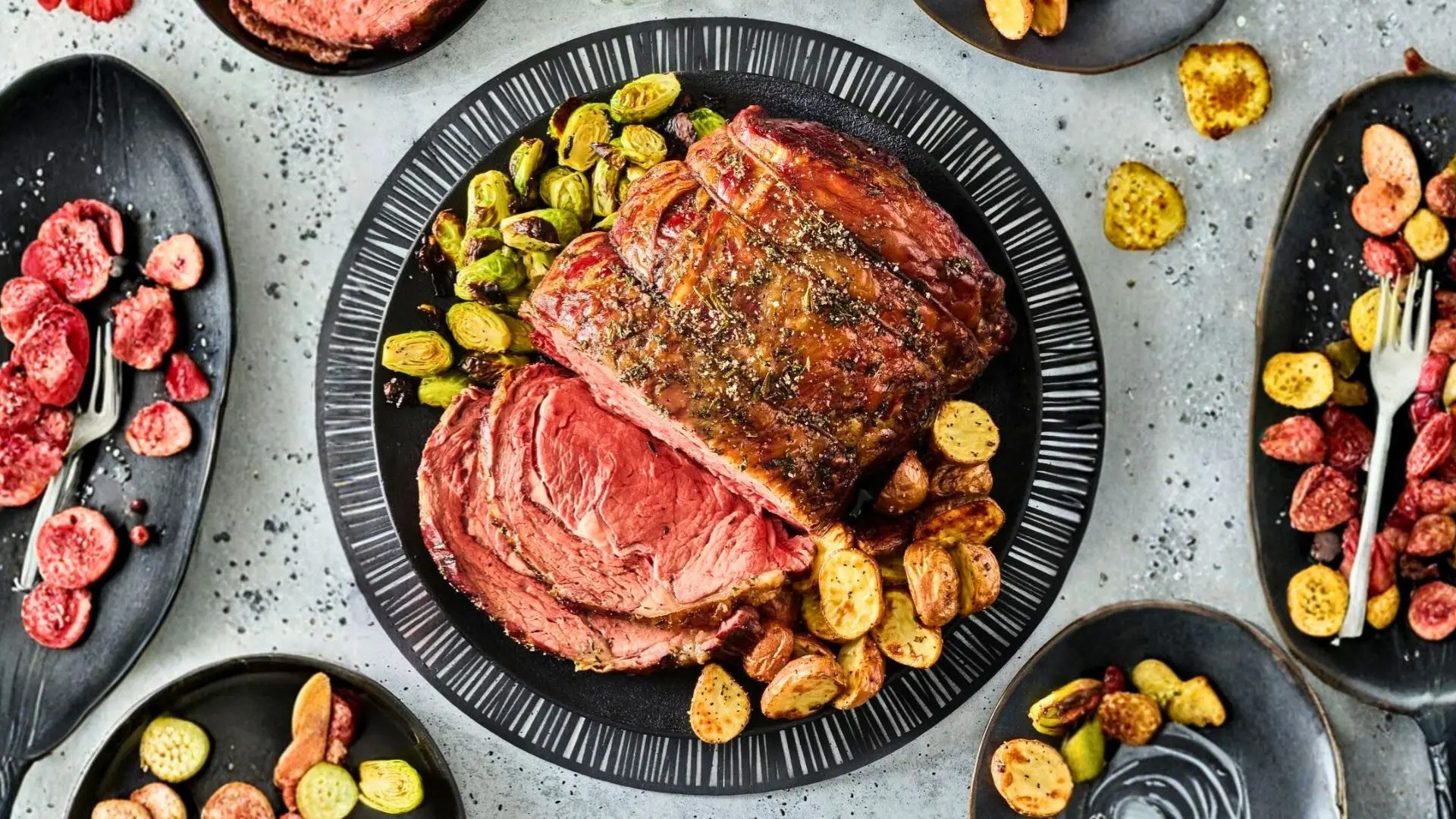
There’s something truly magical about recreating the legendary House of Prime Rib experience in your own kitchen. This copycat house of prime rib roast recipe delivers that same melt-in-your-mouth tenderness and herb-crusted perfection that’s made the San Francisco institution famous for decades.
Whether you’re planning your Christmas prime rib recipe or want to master the art of cooking a standing rib roast for any special occasion, this easy prime rib roast recipe transforms a simple bone-in beef roast into an unforgettable centerpiece.
With a fragrant garlic and herb crust, high-heat searing technique, and foolproof timing, you’ll achieve steakhouse-quality results that’ll have everyone asking for seconds.
What Does This Prime Rib Roast Taste Like?
This prime rib roast recipe delivers an incredibly beefy, rich flavor with a buttery texture that practically melts on your tongue.
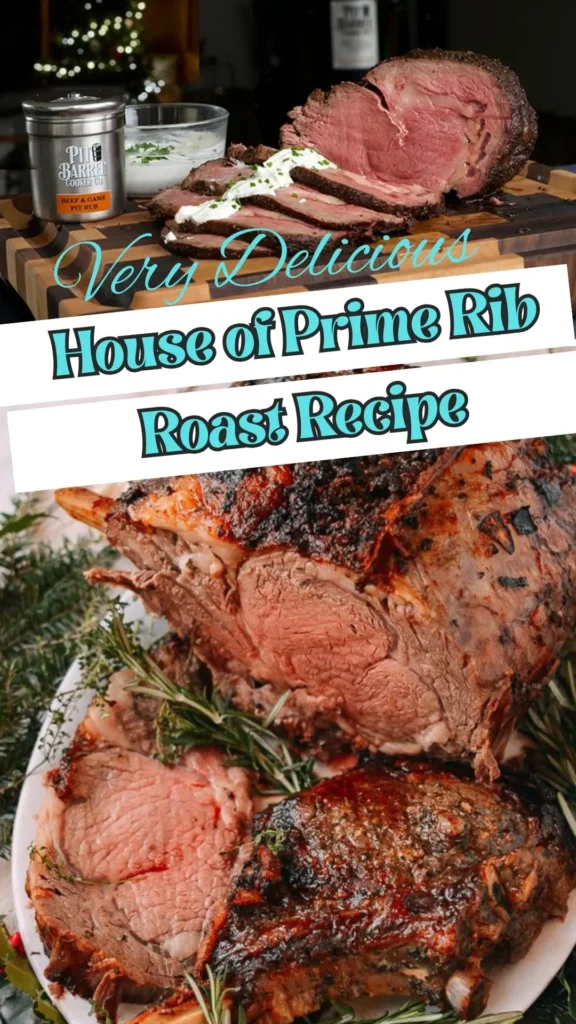
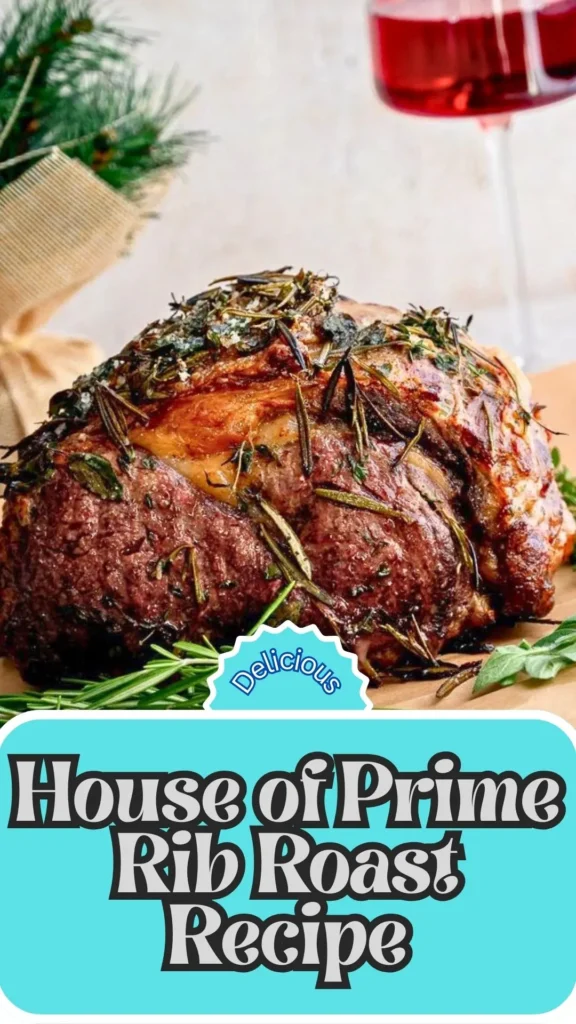
The garlic and herb crust creates an aromatic, savory outer layer with notes of rosemary and thyme that complement the natural beef flavor beautifully. Each slice reveals a perfect gradient from the caramelized, herb-encrusted exterior to the rosy-pink, tender interior.
The bone-in preparation adds extra depth and moisture, while the rendering fat bastes the meat during cooking, creating that signature prime rib succulence. It’s an indulgent, luxurious taste experience simultaneously elegant and comforting.
House of Prime Rib Roast Recipe Ingredients You’ll Need
For the Prime Rib Roast:
- 7-pound bone-in beef prime rib roast
- Kitchen string (long enough to tie the roast)
- 2 teaspoons salt (for initial seasoning)
For the Garlic and Herb Crust:
- 6 large garlic cloves (minced with a knife)
- 1 teaspoon fresh rosemary leaves (minced) or ½ teaspoon dried rosemary
- ½ teaspoon fresh thyme leaves (from 2 sprigs) or ¼ teaspoon dried thyme
- ½ tablespoon sea salt
- ½ tablespoon black pepper (freshly ground)
- 3 tablespoons light olive oil (or any high smoke point oil)
Kitchen Utensils Needed
- Sharp butcher knife or boning knife
- Kitchen string
- Small mixing bowl
- Roasting pan with rack (or bones serve as rack)
- Oven-safe meat thermometer
- Paper towels
- Aluminum foil
- Cutting board
- Plastic wrap
Preparation and Cooking Time
- Prep Time: 20 minutes (plus 3 hours resting at room temperature)
- Cook Time: 1 hour 45 minutes (approximately)
- Resting Time: 30 minutes
- Total Time: 5 hours 35 minutes
- Servings: 10-12 people
How to Make the Best Prime Rib Roast Recipe
Step 1: Prepare the Roast
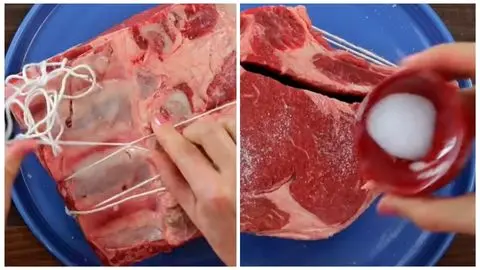
Cut the bones away from the 7-pound bone-in prime rib roast using a sharp knife, following along the natural seam (or ask your butcher to do this for you). This technique makes slicing easier while keeping the bones for added flavor during cooking.
Step 2: Tie the Bones Back
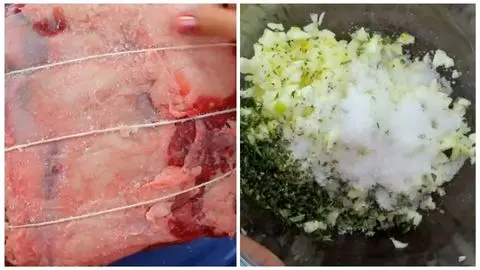
Place the bones back against the roast in their original position. Using kitchen string, make one tight loop around the roast and tie a secure knot. Add 2-3 more tight loops along the length of the roast, tying another knot at the end to hold everything firmly in place.
Step 3: Season and Rest
Season the entire standing rib roast generously with 2 teaspoons of salt, coating all surfaces evenly. Cover loosely with plastic wrap and let it rest on the counter for about 3 hours to come to room temperature. This crucial step ensures even cooking throughout.
Step 4: Make the Prime Rib Marinade Crust
Mince 6 large garlic cloves with a knife avoid using a garlic press as hand-minced garlic releases better flavor. Mince 1 teaspoon fresh rosemary leaves and ½ teaspoon fresh thyme leaves (or substitute with dried herbs). Combine in a small bowl with ½ tablespoon sea salt, ½ tablespoon freshly ground black pepper, and 3 tablespoons light olive oil. Mix thoroughly until you have a fragrant paste.
Step 5: Apply the Herb Crust
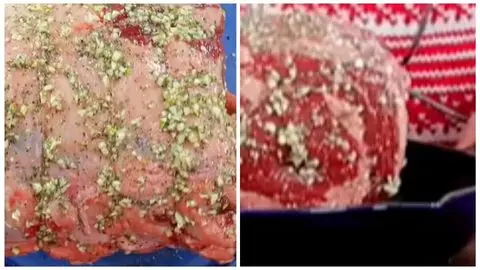
When the roast has nearly reached room temperature, pat it dry lightly with paper towels to help the crust adhere. Rub the garlic-herb mixture generously all over the prime rib roast, concentrating on the top and sides where it will create the most flavorful crust.
Step 6: Position in Roasting Pan
Place the seasoned rib roast in a roasting pan, bone-side down. The bones act as a natural roasting rack, elevating the meat and allowing heat to circulate evenly underneath.
Step 7: Insert Thermometer and Preheat
Insert an oven-safe meat thermometer into the thickest part of the roast, avoiding contact with bone or fat. Preheat your oven to 500°F this high initial temperature will create that beautiful caramelized crust.
Step 8: High-Heat Sear
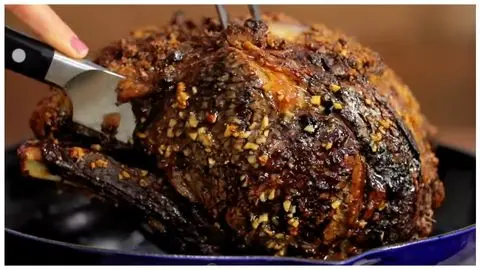
Place the roast in the preheated 500°F oven and bake for exactly 15 minutes. This prime rib roast recipe oven technique sears the exterior quickly, locking in juices and creating incredible flavor.
Step 9: Reduce Temperature
Without opening the oven door (this is important to maintain consistent heat), reduce the temperature to 325°F. Continue baking for 14-15 minutes per pound for medium doneness pproximately 1½ hours for a 7-pound roast.
Step 10: Check for Doneness
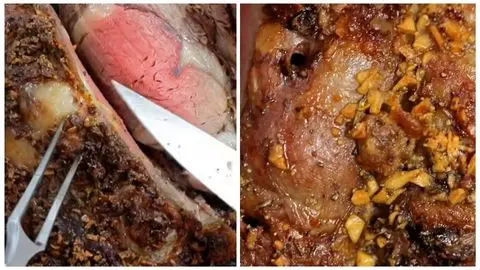
For medium-rare, aim for an internal temperature of 120-125°F; for medium, 130-135°F. Remember that the temperature will rise another 5-10 degrees during resting.
Step 11: Rest the Roast
Remove the prime rib from the oven and take out the meat thermometer. Loosely tent the roast with aluminum foil and let it rest for at least 30 minutes. Leave it in the pan if bones are still attached, or transfer to a cutting board.
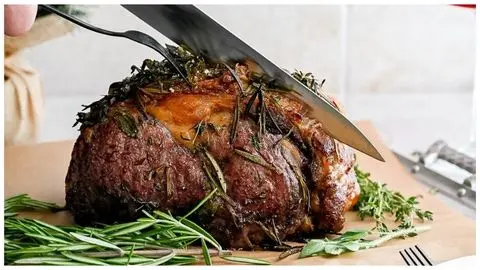
Step 12: Slice and Serve
Remove the kitchen string and cut the ribs away from the meat if still attached. Slice the roast into ½ to ¾-inch thick portions, slicing against the grain for maximum tenderness. Serve immediately and enjoy your restaurant-quality prime rib!
Customization and Pairing Ideas for Your Prime Rib Roast
1. Coffee and Peppercorn Crust Variation
Transform your prime rib marinade by adding 2 tablespoons finely ground coffee and 1 tablespoon cracked peppercorns to the herb mixture. The coffee enhances the beef’s natural richness while creating a sophisticated, slightly bitter crust that balances the fatty meat beautifully. This steakhouse-inspired variation pairs wonderfully with bold red wines.
2. Horseradish Compound Butter
Elevate this easy prime rib roast recipe by serving slices with homemade horseradish compound butter. Mix ½ cup softened butter with 2 tablespoons prepared horseradish, 1 teaspoon Dijon mustard, and fresh chives. The pungent, creamy topping cuts through the richness perfectly and adds a traditional steakhouse touch.
3. Red Wine Au Jus Enhancement
Create an restaurant-quality au jus by deglazing your roasting pan with 2 cups red wine and 2 cups beef stock after removing the roast. Simmer with fresh thyme sprigs until reduced by half. This sophisticated sauce showcases why this standing rib roast recipe rivals any upscale establishment.
4. Sweet Earthy Contrast
Add the subtle sweetness of a House of Prime Rib Beet Salad with tender slices of rib roast, complemented by Yorkshire pudding, perfect for soaking up juices and creating a traditional, satisfying dinner experience.
5. Yorkshire Pudding Pairing
Honor the British tradition by serving your prime rib roast recipe with classic Yorkshire puddings. Use the rendered drippings from your roasting pan to make these puffy, golden popovers. They’re the perfect vehicle for soaking up au jus and complement the beef’s richness with their light, airy texture.
6. Fresh Vibrant Touch
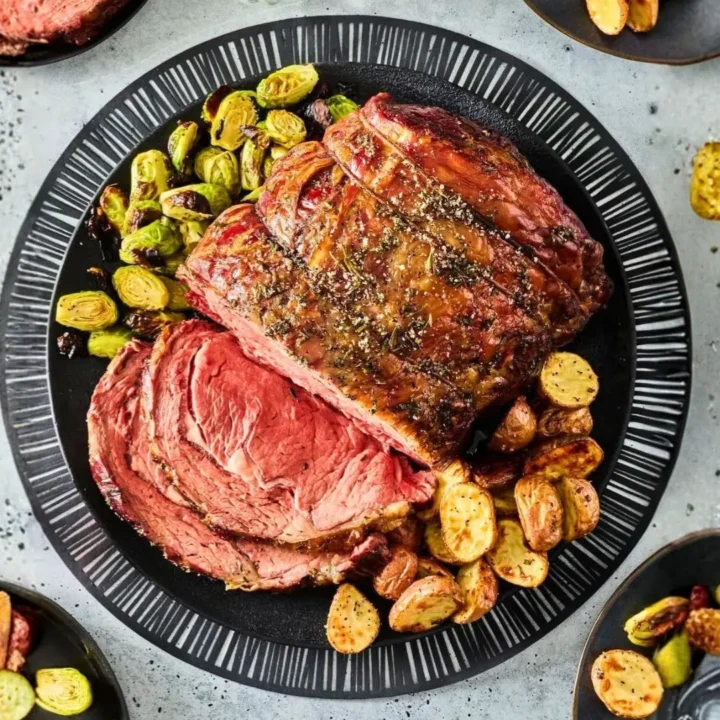
Serve the roast alongside a House of Prime Rib San Francisco Salad to add crisp freshness, balanced with brussels sprouts roasted for crunch and earthy flavor, creating a visually stunning and flavorful plate.
7. Garlic Herb Butter Basting
For an even more indulgent rib roast, create a basting butter using the drippings. Every 20 minutes during the low-temperature roasting phase, brush the meat with melted butter mixed with minced garlic and fresh herbs. This technique, inspired by the best prime rib roast recipe methods, creates an incredibly flavorful, glistening crust.
8. Loaded Twice-Baked Potato Bar
Set up a steakhouse-style side station with twice-baked potatoes loaded with sour cream, chives, bacon bits, and aged cheddar. The creamy, indulgent potatoes balance the protein-rich prime rib perfectly and create an interactive dining experience your guests will love.
9. Elegant Comfort Plate
Pair mashed potatoes with your prime rib for a classic, comforting meal, complemented by creamed spinach for richness and creaminess. This combination highlights both texture and flavor, making your dinner memorable.
10. Fresh Horseradish and Herb Platter
Channel the House of Prime Rib experience by presenting sliced roast on a warmed platter surrounded by freshly grated horseradish, whole grain mustard, creamed spinach, and roasted root vegetables. This family-style presentation turns your Christmas prime rib recipe into an impressive, memorable feast.
Expert Tips for Perfect Prime Rib Every Time
1. Choose the Right Grade and Cut
When selecting your bone-in beef prime rib roast, opt for USDA Prime or Choice grade for optimal marbling and tenderness. Ask your butcher for a “first cut” (ribs 10-12) which has better marbling than the “second cut.” A good rule for this prime rib roast recipe is to plan for one rib bone per two people, so a 3-bone roast serves 6-8 guests comfortably.
2. The Room Temperature Rule is Non-Negotiable
This is the most critical step in any easy prime rib roast recipe. Allowing your standing rib roast to rest at room temperature for 3 hours ensures the meat cooks evenly from edge to center. A cold roast straight from the refrigerator will have an overcooked exterior and undercooked center. Plan your timing accordingly this step cannot be rushed.
3. Hand-Mince Garlic for Superior Flavor
Never use a garlic press for your prime rib marinade. Hand-minced garlic releases aromatic oils more gradually and distributes more evenly throughout the herb crust. The texture is also superior you’ll get little bursts of garlic flavor rather than an overwhelming paste. This small technique elevates your copycat house of prime rib roast recipe dramatically.
4. Invest in a Quality Meat Thermometer
A reliable oven-safe meat thermometer is essential for this prime rib roast recipe oven method. Insert it into the thickest part of the roast before cooking begins, and monitor closely during the final 30 minutes. Remember that carryover cooking will raise the internal temperature by 5-10°F during resting, so remove the roast when it’s 5 degrees below your target temperature.
5. Don’t Skip the High-Heat Sear
The initial 500°F blast for 15 minutes is what creates that incredible, caramelized herb crust that defines the best prime rib roast recipe. This technique, called the “reverse sear method” when done at the beginning, locks in juices through the Maillard reaction while giving you that restaurant-quality exterior. Never open the oven door during this crucial phase.
6. Master the Resting Period
Resting is just as important as cooking for this rib roast. During the 30-minute rest, the meat fibers relax and reabsorb juices that were pushed to the center during cooking. Cutting too early results in a dry roast as all those precious juices run onto the cutting board. Tent loosely with foil wrapping too tightly creates steam that softens your beautiful crust.
7. Use the Bones as Your Secret Weapon
Keeping the bones attached during cooking (even if you cut them away first) serves multiple purposes in this standing rib roast recipe. The bones conduct heat, helping the roast cook more evenly. They also release collagen and flavor into the meat while protecting the underside from direct heat. After cooking, those bones make incredible “chef’s treats” or can be used for making rich beef stock.
Storage and Reheating Guidance
Store leftover prime rib wrapped tightly in aluminum foil or in an airtight container in the refrigerator for up to 4 days. For reheating, bring slices to room temperature, then warm gently in a 250°F oven until just heated through (about 10-15 minutes) to preserve moisture and prevent overcooking.
House of Prime Rib Roast Recipe
There’s something truly magical about recreating the legendary House of Prime Rib experience in your own kitchen. This copycat house of prime rib roast recipe delivers that same melt-in-your-mouth tenderness and herb-crusted perfection that’s made the San Francisco institution famous for decades.
Ingredients
- 7-pound bone-in beef prime rib roast
- Kitchen string (long enough to tie the roast)
- 2 teaspoons salt (for initial seasoning)
- 6 large garlic cloves (minced with a knife)
- 1 teaspoon fresh rosemary leaves (minced) or ½ teaspoon dried rosemary
- ½ teaspoon fresh thyme leaves (from 2 sprigs) or ¼ teaspoon dried thyme
- ½ tablespoon sea salt
- ½ tablespoon black pepper (freshly ground)
- 3 tablespoons light olive oil (or any high smoke point oil)
Instructions
Step 1: Prepare the Roast
Cut the bones away from the 7-pound bone-in prime rib roast using a sharp knife, following along the natural seam (or ask your butcher to do this for you). This technique makes slicing easier while keeping the bones for added flavor during cooking.
Step 2: Tie the Bones Back
Place the bones back against the roast in their original position. Using kitchen string, make one tight loop around the roast and tie a secure knot. Add 2-3 more tight loops along the length of the roast, tying another knot at the end to hold everything firmly in place.
Step 3: Season and Rest
Season the entire standing rib roast generously with 2 teaspoons of salt, coating all surfaces evenly. Cover loosely with plastic wrap and let it rest on the counter for about 3 hours to come to room temperature. This crucial step ensures even cooking throughout.
Step 4: Make the Prime Rib Marinade Crust
Mince 6 large garlic cloves with a knife avoid using a garlic press as hand-minced garlic releases better flavor. Mince 1 teaspoon fresh rosemary leaves and ½ teaspoon fresh thyme leaves (or substitute with dried herbs). Combine in a small bowl with ½ tablespoon sea salt, ½ tablespoon freshly ground black pepper, and 3 tablespoons light olive oil. Mix thoroughly until you have a fragrant paste.
Step 5: Apply the Herb Crust
When the roast has nearly reached room temperature, pat it dry lightly with paper towels to help the crust adhere. Rub the garlic-herb mixture generously all over the prime rib roast, concentrating on the top and sides where it will create the most flavorful crust.
Step 6: Position in Roasting Pan
Place the seasoned rib roast in a roasting pan, bone-side down. The bones act as a natural roasting rack, elevating the meat and allowing heat to circulate evenly underneath.
Step 7: Insert Thermometer and Preheat
Insert an oven-safe meat thermometer into the thickest part of the roast, avoiding contact with bone or fat. Preheat your oven to 500°F this high initial temperature will create that beautiful caramelized crust.
Step 8: High-Heat Sear
Place the roast in the preheated 500°F oven and bake for exactly 15 minutes. This prime rib roast recipe oven technique sears the exterior quickly, locking in juices and creating incredible flavor.
Step 9: Reduce Temperature
Without opening the oven door (this is important to maintain consistent heat), reduce the temperature to 325°F. Continue baking for 14-15 minutes per pound for medium doneness pproximately 1½ hours for a 7-pound roast.
Step 10: Check for Doneness
For medium-rare, aim for an internal temperature of 120-125°F; for medium, 130-135°F. Remember that the temperature will rise another 5-10 degrees during resting.
Step 11: Rest the Roast
Remove the prime rib from the oven and take out the meat thermometer. Loosely tent the roast with aluminum foil and let it rest for at least 30 minutes. Leave it in the pan if bones are still attached, or transfer to a cutting board.
Step 12: Slice and Serve
Remove the kitchen string and cut the ribs away from the meat if still attached. Slice the roast into ½ to ¾-inch thick portions, slicing against the grain for maximum tenderness. Serve immediately and enjoy your restaurant-quality prime rib!
Notes
Store leftover prime rib wrapped tightly in aluminum foil or in an airtight container in the refrigerator for up to 4 days. For reheating, bring slices to room temperature, then warm gently in a 250°F oven until just heated through (about 10-15 minutes) to preserve moisture and prevent overcooking.
Nutrition Information:
Yield: 6 Serving Size: 1 Amount Per Serving: Calories: 320Common Questions About Prime Rib Roast
Here, we’ve got you covered with some common questions about the House of Prime Rib Roast Recipe that people often ask.
How much prime rib roast should I buy per person?
Plan for ¾ to 1 pound of bone-in prime rib per person, or ½ pound per person for boneless. This accounts for bone weight and ensures generous portions with some leftovers. For a party of 8-10, a 7-pound bone-in roast is perfect.
Do I need to let the prime rib come to room temperature before cooking?
Yes, absolutely. This is one of the most important steps in any prime rib roast recipe. Letting the roast sit at room temperature for 2-3 hours ensures even cooking throughout. A cold roast will have an overcooked exterior and raw center.
What’s the difference between prime rib and standing rib roast?
They’re essentially the same cut a bone-in beef rib roast from the primal rib section. “Prime rib” refers to the preparation method (roasted whole), while “standing rib roast” describes how it stands on its rib bones during cooking. Both terms work for this recipe.
Can I make this prime rib roast recipe without bones?
Yes, you can use a boneless rib roast, though the bones add flavor and help the meat cook more evenly. If using boneless, place the roast on a roasting rack instead. Reduce cooking time slightly and monitor the internal temperature carefully.
What internal temperature should I aim for with this Christmas prime rib recipe?
For rare, target 120-125°F; for medium-rare, 130-135°F; for medium, 135-140°F. Remember to remove the roast 5 degrees before your target temperature since it will continue cooking during the 30-minute rest period.
Why do you reduce the oven temperature after the initial sear?
The high 500°F temperature creates a flavorful crust quickly, then reducing to 325°F allows the interior to cook gently without overcooking the exterior. This two-temperature method is the secret behind the best prime rib roast recipe results.
Can I prepare the garlic and herb crust ahead of time?
Absolutely! You can make the prime rib marinade mixture up to 24 hours in advance and store it covered in the refrigerator. Let it come to room temperature before applying to the roast for easiest spreading and best flavor distribution.
How do I know when my rib roast is done without a thermometer?
While a meat thermometer is highly recommended for this prime rib roast recipe oven method, you can use the touch test rare feels like the flesh at the base of your thumb when relaxed, medium-rare when slightly tensed, and medium when fully tensed. However, this takes practice.
Should I cover the prime rib while it cooks?
No, never cover the roast during cooking. You want dry heat to create that beautiful herb crust. Only tent loosely with foil during the resting period after removing from the oven. Covering during cooking would steam the meat rather than roast it.
What’s the best way to reheat leftover prime rib without drying it out?
The best method for this easy prime rib roast recipe leftovers is low and slow. Place slices in a baking dish with a splash of beef broth, cover with foil, and warm at 250°F for 10-15 minutes. This gentle reheating preserves moisture and prevents the meat from becoming tough.
Can I use dried herbs instead of fresh for the crust?
Yes, dried herbs work well in this standing rib roast recipe. Use half the amount called for (½ teaspoon dried rosemary and ¼ teaspoon dried thyme). Dried herbs are more concentrated, so less is needed to achieve similar flavor intensity.
Why do you tie the bones back onto the roast after cutting them off?
Cutting the bones away makes slicing much easier after cooking, but keeping them attached during roasting adds incredible flavor, helps even heat distribution, and protects the meat from direct heat. It’s the best of both worlds easy serving with maximum flavor.
Mastering this copycat house of prime rib roast recipe transforms you from home cook to confident host. The combination of proper technique, quality ingredients, and patient timing creates a prime rib roast that rivals any steakhouse experience.
Whether this becomes your signature Christmas prime rib recipe or your go-to celebration centerpiece, the herb-crusted perfection and tender, juicy interior will have guests requesting this dish year after year. Now it’s time to preheat that oven and create some unforgettable culinary memories!
We’d love to hear how this recipe turns out for you! Give it a try, then drop a comment below to share your thoughts and tips with us.
You can also follow us on Pinterest, and YouTube for more delicious updates and kitchen inspiration. Your feedback and support mean the world to us!